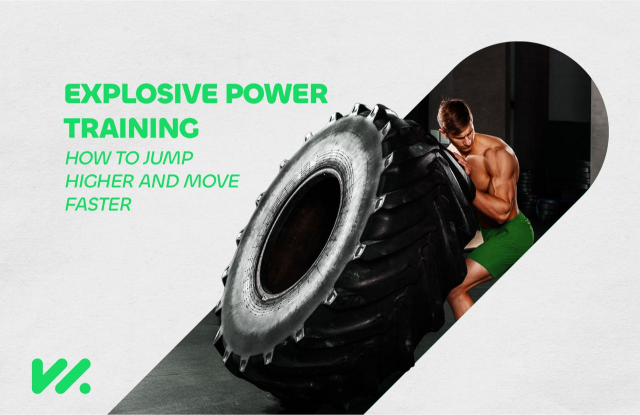
The Power That Separates Good from Great
In every sport — whether it’s basketball, football, martial arts, or sprinting — explosive power is the X-factor that defines elite performance. It’s what allows athletes to jump higher, accelerate faster, cut sharper, and deliver peak performance in seconds. But explosive athletic performance isn’t just raw strength or speed; it’s a strategic combination of neuromuscular coordination, fast-twitch muscle activation, and intentional training.
If you’ve ever asked:
“How can I jump higher?”
“How can I move faster on the field or court?”
This guide delivers science-backed answers and real-world training tips to help you explode with purpose — no fluff, just performance.
Understanding the Science: What Is Explosive Power?
Let’s get technical — just for a moment. Explosive power is the ability to exert maximum force in minimum time. It’s not just how strong you are, but how fast you can produce that strength.
This involves:
- Rate of Force Development (RFD)
- Neuromuscular efficiency
- Type II (fast-twitch) muscle fiber recruitment
A sprinter’s first step or a volleyball player’s leap are textbook examples of explosive movement. These actions are short in duration but incredibly forceful.
Fun Fact: Olympic lifters and gymnasts tend to have extremely high RFD scores — proof that lifting and bodyweight dynamics both build explosiveness.
Phase 1: Priming Your Body with Mobility & Activation (Don’t Skip This!)
Before you jump into box jumps or sprints, your joints, muscles, and nervous system need to be primed.
Dynamic Warm-Up Routine (5–8 min)
- High knees (30 sec)
- Leg swings (front/back & lateral)
- Arm circles + shoulder rolls
- Hip openers (world’s greatest stretch)
Activation Moves
- Glute bridges with band
- Monster walks
- Ankle bounces
These movements “wake up” key muscle groups, especially the glutes, hamstrings, core, and calves — essential for vertical jump training and acceleration speed.
Phase 2: Strength Feeds Power
Explosive athletes are also strong athletes — not bodybuilder-strong, but functionally powerful. If you can’t squat or deadlift with control and speed, your power will plateau.
Foundational Strength Lifts
- Trap Bar Deadlifts – encourage power through hips
- Front Squats – emphasize upright posture and quad strength
- Romanian Deadlifts – target explosive hip extension
Tempo Tips
Train with controlled eccentrics (slow down) and explosive concentrics (lift fast) to simulate real-life athletic bursts.
Example: 3-sec lower + fast lift = better power output in jumps and sprints.
Phase 3: Pure Plyometrics (Your Secret Weapon)
Plyometrics are the gold standard for developing explosive speed and jumping ability.
Key Plyo Movements
- Depth Jumps – trains ground contact time
- Broad Jumps – builds horizontal force
- Single-Leg Hops – improves balance and explosive takeoff
- Box Jumps (Low Reps, High Effort) – trains vertical explosiveness
Pro Tip: Keep reps low (3–5) and focus on quality over fatigue. Power is lost once you’re gassed out.
Phase 4: Sprint & Speed Training
Now we shift to the field or turf. Pure acceleration and top-end speed require full-body coordination and power transfer.
Sprint Development Focus
- Wall Drills – reinforce sprint mechanics
- Resisted Sled Sprints – build acceleration force
- Flying Sprints – sharpen top speed
Combine this 1–2x a week with your gym sessions for maximum sports performance training.
Recovery = Retained Power
Muscle fatigue kills power. To stay explosive, you need to recover like a pro.
Recovery Tips
- Sleep 7–9 hours – most muscle repair happens during deep sleep
- Hydrate + replenish electrolytes
- Active recovery days with mobility drills
- Use cold exposure or contrast baths post-intensive sessions
Plan de-load weeks every 4–6 weeks of explosive training to let your nervous system recharge.
Bonus: Tracking Your Power Gains
If you’re serious about improving, track your results.
- Vertical jump height (use apps like MyJump)
- 10-yard and 40-yard sprint times
- Standing broad jump distance
- Number of single-leg hops without losing form
Seeing progress builds motivation and lets you fine-tune your training.
Final Words: Train with Intent, Explode with Precision
Explosive power training isn’t just for elite athletes — it’s for anyone who wants to move better, jump higher, and excel in their sport. The key is smart progression, intentional movement, and knowing when to push and when to rest.
So, lace up, warm up, lift smart, jump hard — and explode into your next level.