Exercise Profile
Target Muscle Group:
- Primary: Biceps Brachii (Long Head & Short Head)
- Secondary: Brachialis, Brachioradialis, Forearms
Exercise Type:
- Strength Training / Hypertrophy
Equipment Required:
- Barbell (Standard or EZ-Bar)
Mechanics:
- Isolation (Single-Joint Exercise)
Force Type:
- Pull (Concentric & Eccentric Phases)
Experience Level:
- All Levels (Beginner to Advanced)
Best For:
- Biceps Mass, Arm Strength, Muscle Definition
Common Risks:
- Elbow Strain (if using excessive weight or poor form)
Overview
The Standing Barbell Curl is a foundational exercise for building impressive biceps. It’s a staple in strength training programs due to its ability to overload the biceps with heavy weight while promoting balanced muscle growth. By using a barbell, you engage both arms simultaneously, ensuring symmetry and maximizing time under tension. This exercise is ideal for lifters aiming to increase arm size, improve pulling strength, or enhance athletic performance.
Exercise Instructions
Step-by-Step Form:
- Setup:
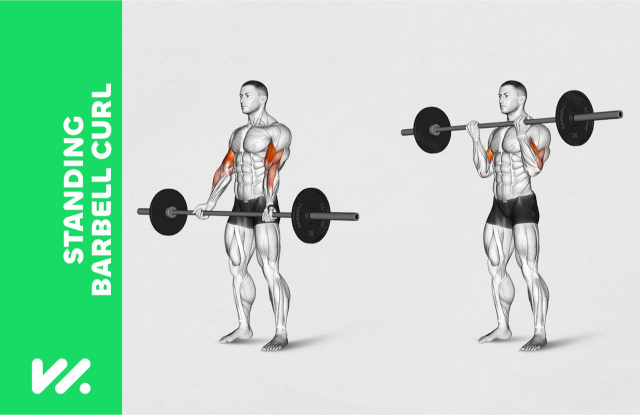
- Stand upright with feet shoulder-width apart.
- Grip the barbell with an underhand (supinated) grip, hands slightly wider than shoulder-width.
- Let the barbell hang at arm’s length in front of your thighs. Engage your core.
- Lifting Phase:
- Keeping your elbows pinned to your sides, curl the barbell toward your chest.
- Focus on squeezing your biceps as you lift—avoid using momentum or swinging your torso.
- Peak Contraction:
- Pause for 1–2 seconds at the top (when the bar is near shoulder level).
- Lowering Phase:
- Slowly lower the barbell back to the starting position, resisting gravity for 2–3 seconds.
- Repetitions:
- Aim for 3–4 sets of 8–12 reps for hypertrophy or 4–6 reps for strength.
Professional Tips
Maximize Results:
- Control the Eccentric: Lowering the bar slowly (3+ seconds) increases muscle damage and growth.
- Full Range of Motion: Start with arms fully extended at the bottom and lift until your forearms touch your biceps.
- Grip Variations:
- Wide Grip: Emphasizes the short head of the biceps.
- Narrow Grip: Targets the long head and brachialis.
Avoid Common Mistakes:
- Swinging the Bar: Keep your torso stationary—only your elbows should move.
- Elbow Flaring: Elbows drifting forward reduces biceps engagement.
- Overloading Weight: Prioritize form over ego lifting to prevent injury.
Progression:
- Add 2.5–5 lbs (1–2 kg) weekly to the barbell for progressive overload.
- For advanced lifters, use cheat reps sparingly to push past plateaus.
Benefits of the Standing Barbell Curl
- Functional Strength: Improves performance in pulling movements (e.g., rows, pull-ups).
- Symmetry: Balances muscle development between arms.
- Time Efficiency: Works both arms simultaneously for quicker workouts.
Variations & Alternatives
- EZ-Bar Curl: Reduces wrist strain with a semi-supinated grip.
- Reverse-Grip Barbell Curl: Targets brachialis and forearms (palms-down grip).
- Cable Machine Curl: Provides constant tension throughout the movement.
Ready to level up your arm gains? Pair this exercise with Back & Biceps Workout Plans or explore Advanced Training Techniques for faster results!