Exercise Profile
Target Muscle Group:
Primary: Adductor Longus, Adductor Brevis, Adductor Magnus (Inner Thigh Muscles)
Secondary: Pectineus, Gracilis, Obliques (Stabilization)
Exercise Type:
Bodyweight / Strengthening
Isolation (Single-Joint Exercise)
Equipment Required:
Mat (optional for comfort), ankle weights (optional for progression)
Mechanics:
Isolation (Single-Joint Exercise)
Force Type:
Pull (Concentric & Eccentric Phases)
Experience Level:
Beginner to Intermediate
Best For:
Inner thigh strength, leg toning, lower body stabilization, injury rehab, and home workouts
Common Risks:
Groin strain if rushed or performed with poor form, hip misalignment, lack of core engagement
Overview
The Side-Lying Hip Adduction is a highly effective, low-impact exercise that targets the inner thigh muscles, also known as the hip adductors. By isolating these stabilizing muscles, this move helps build strength, enhance leg definition, and improve pelvic stability. Whether you’re looking to improve athletic performance, recover from injury, or tone your thighs, this exercise is a key component in any lower-body or functional training program.
Exercise Instructions
Step-by-Step Form:
Setup:
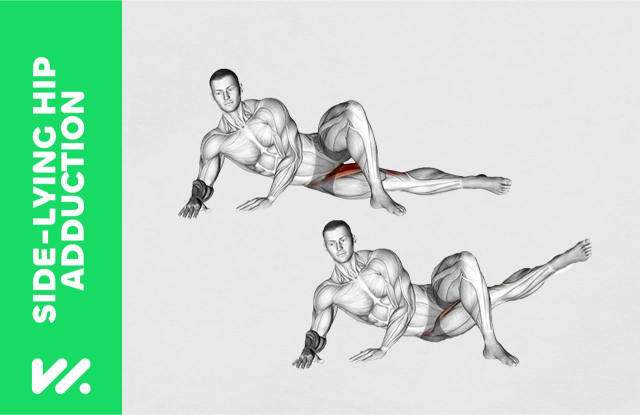
Lie on your side with your bottom leg straight and top leg bent, resting the top foot flat in front of the bottom thigh.
Prop your head on your bottom arm and place the top hand on the floor for stability.
Starting Position:
Engage your core and keep your hips stacked.
Flex the foot of your bottom leg and slightly lift it off the ground.
Adduction Phase:
Exhale and lift your bottom leg upward toward the ceiling, keeping it straight and controlled.
Focus on contracting the inner thigh muscles throughout the lift.
Peak Contraction:
Pause briefly at the top and squeeze the adductors for maximum activation.
Avoid rotating the hips or using momentum.
Returning Phase:
Inhale and slowly lower your leg back to the starting position.
Control the descent to maintain tension.
Repetitions:
Perform 2–4 sets of 12–20 reps per leg.
Add ankle weights or resistance bands for progression.
Professional Tips
Maximize Results:
- Keep your core engaged and body aligned throughout the movement.
- Move slowly and with control—avoid using momentum.
- Flex your foot and fully contract your inner thighs for better muscle activation.
Avoid Common Mistakes:
- Don’t swing the leg or allow the hips to roll backward.
- Avoid overextending—lift only as high as you can without losing form.
- Don’t let your shoulders collapse—maintain a stable side-lying posture.
Progression:
- Add ankle weights or a small dumbbell on the ankle for resistance.
- Perform with a resistance band wrapped around the ankles.
- Try tempo reps (3-second lift, 2-second hold, 3-second lower) to increase time under tension.
Benefits of Side-Lying Hip Adduction
- Inner Thigh Strengthening: Targets the often-neglected adductor muscles, important for balance and coordination.
- Improved Leg Stability: Enhances hip joint control and reduces the risk of injury during walking, running, or sports.
- Thigh Toning & Aesthetics: Helps build lean muscle along the inner thighs, contributing to a more sculpted leg appearance.
- Rehabilitation & Injury Prevention: Commonly used in physical therapy for knee and groin injury prevention.
- No Equipment Needed: Perfect for home workouts or travel fitness routines.
Variations & Alternatives
- Standing Hip Adduction with Band: Performed while standing for balance and core challenge.
- Adductor Machine (Gym): Seated resistance-based version for heavier strength work.
- Sliding Disc Lunges: Engages the adductors in a functional, dynamic movement.
- Sumo Squat Pulses: A compound move that also emphasizes inner thigh activation.
Incorporate the Side-Lying Hip Adduction
Add side-lying hip adductions to your lower body workout routines, rehab protocols, or toning circuits. They pair perfectly with glute bridges, clamshells, and side-lying hip abductions for balanced hip development. This exercise is especially useful for runners, dancers, athletes, or anyone aiming to improve leg alignment, posture, and core-controlled movement.
“Side-lying hip adductions are a foundational movement for building inner thigh strength, improving hip stability, and creating functional symmetry in your lower body. A must-have in any leg day routine.”
— Certified Athletic Trainer (ATC)