Exercise Profile
Target Muscle Group:
- Primary: Transverse Abdominis, Rectus Abdominis (Core Stabilizers)
- Secondary: Obliques, Erector Spinae (Lower Back), Shoulders, Glutes
Exercise Type:
- Core Training / Strength (Isometric Hold)
Equipment Required:
- Exercise Mat (optional)
Mechanics:
- Isometric (Static Hold – No Joint Movement)
Force Type:
- Static (Muscles Engage Against Gravity)
Experience Level:
- All Levels (Beginner to Advanced)
Best For:
- Core Strength, Posture Improvement, Full-Body Endurance
Common Risks:
- Lower Back Strain (if hips sag or form deteriorates)
Overview
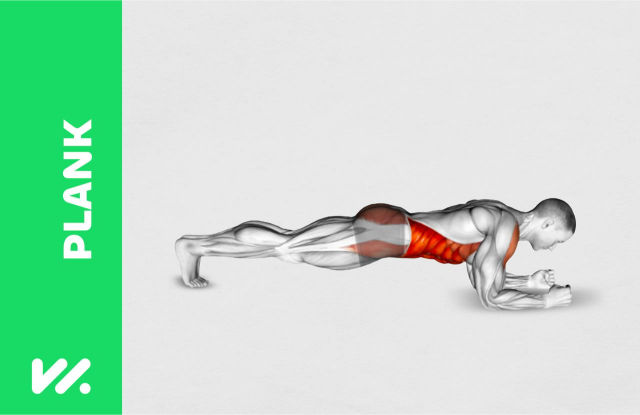
The Plank is a foundational isometric exercise that builds core stability, strengthens the entire anterior chain (front body), and enhances posture. By maintaining a neutral spine against gravity, it teaches proper alignment while engaging muscles from your shoulders to your glutes. Perfect for athletes, office workers, and fitness enthusiasts, the plank improves functional strength for daily movements and athletic performance, making it a staple in yoga, Pilates, and strength-training programs.
Exercise Instructions
Step-by-Step Form:
- Starting Position:
- Lie face-down on the floor. Place forearms on the mat, elbows under shoulders.
- Curl toes under and lift your body into a straight line from head to heels.
- Alignment:
- Engage your core by pulling your belly button toward your spine.
- Squeeze glutes and thighs to prevent hips from sagging or lifting.
- Keep your neck neutral (gaze slightly ahead, not up).
- Hold Phase:
- Maintain tension in your entire body without holding your breath.
- Duration:
- Hold for 20–60 seconds for 3–4 sets (adjust time based on fitness level).
Professional Tips
Maximize Results:
- Breathing: Breathe deeply and steadily—avoid breath-holding.
- Progression:
- Increase hold time by 5–10 seconds weekly.
- Elevate feet on a bench or add a weight plate to your back for advanced challenges.
- Form Cues:
- “Zip up” your core like tightening a corset.
- “Squeeze a penny” between your glutes.
Avoid Common Mistakes:
- Hip Sagging: Keep your body straight—use a mirror or partner to check form.
- Rounded Shoulders: Press forearms firmly into the floor to engage serratus anterior.
- Head Position: Avoid craning your neck upward or dropping your head.
Variations for All Levels:
- Knee Plank: Modify by lowering knees to the floor for beginners.
- Side Plank: Targets obliques and lateral core strength.
- Plank with Shoulder Taps: Adds dynamic instability for advanced users.
Benefits of the Plank
- Core Resilience: Protects the spine during lifting, running, or twisting motions.
- Postural Health: Counters slouching from prolonged sitting.
- Functional Fitness: Enhances balance, stability, and athletic performance.
Variations & Alternatives
- Forearm Plank: Standard variation (as described above).
- High Plank: Performed on hands (like the top of a push-up).
- Reverse Plank: Targets posterior chain (hamstrings, glutes, upper back).
- Plank with Leg Lift: Adds glute and hip stability challenge.
- Dynamic Plank: Incorporate mountain climbers or hip dips for mobility.
Incorporate this exercise into Core Workouts, Warm-Ups, or HIIT Circuits for a rock-solid midsection and improved overall strength!