Exercise Profile
Target Muscle Group:
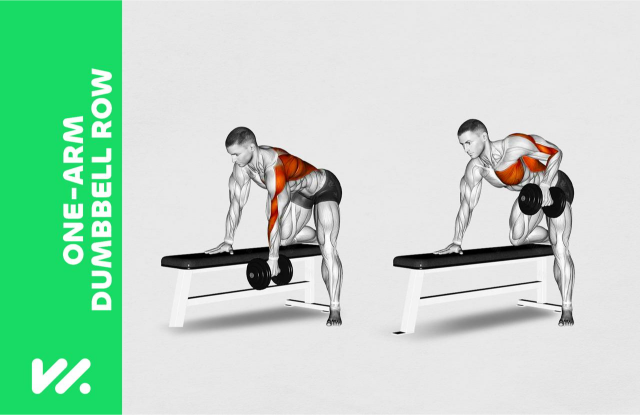
Primary: Latissimus Dorsi
Secondary: Rhomboids, Trapezius, Rear Deltoids, Biceps, Core (stabilization)
Exercise Type:
Strength Training / Hypertrophy
Compound (Multi-Joint Exercise)
Equipment Required:
Dumbbell, Bench (or flat surface for support)
Mechanics:
Compound (Multi-Joint Exercise)
Force Type:
Pull (Concentric & Eccentric Phases)
Experience Level:
Beginner to Advanced
Best For:
Back muscle development, lat width, unilateral strength, core stabilization, posture correction
Common Risks:
Lower back strain, over-rotation, lack of core control, using momentum to lift
Overview
The One-Arm Dumbbell Row is a fundamental back exercise that targets the lats, rhomboids, and rear delts through a full range of motion. By training one side at a time, you not only increase muscular focus and mind-muscle connection, but also correct asymmetries and improve core stability. Ideal for both beginners and advanced lifters, this unilateral movement enhances back definition, strengthens the posterior chain, and supports proper posture—making it a staple in any pull workout or upper body training plan.
Exercise Instructions
Step-by-Step Form:
Setup:
Place your left knee and left hand on a flat bench.
Your right leg should be planted firmly on the ground, with your right arm holding a dumbbell.
Starting Position:
Keep your back flat, chest up, and core braced.
Allow the dumbbell to hang straight down below your shoulder.
Contraction Phase:
Exhale and pull the dumbbell toward your torso by bending your elbow and squeezing your shoulder blade inward.
Focus on using your back muscles—not your biceps—to drive the movement.
Peak Contraction:
Pause at the top of the row and squeeze your lats and rhomboids.
Your elbow should finish close to your body and behind your torso.
Returning Phase:
Inhale and slowly lower the dumbbell to the starting position.
Maintain control and tension throughout the descent.
Repetitions:
Perform 3–4 sets of 8–15 reps per arm, depending on your goals.
Choose a weight that allows for full range of motion and strict form.
Professional Tips
Maximize Results:
- Keep your spine neutral and avoid twisting or rotating the torso.
- Drive through the elbow, not the hand, to activate the lats.
- Maintain a tight core to prevent lower back compensation.
Avoid Common Mistakes:
- Don’t jerk the dumbbell—use slow and controlled motion.
- Avoid rounding or overextending your back.
- Don’t let your shoulder roll forward at the bottom of the rep.
Progression:
- Increase the weight gradually as strength improves.
- Use tempo reps (e.g., 3-second eccentric) for time under tension.
- Try unsupported one-arm rows (standing with no bench) for added core challenge.
Benefits of One-Arm Dumbbell Rows
- Unilateral Back Strength: Helps identify and correct left/right muscle imbalances.
- Lat Development & Width: Builds thickness and width in the upper and mid-back.
- Improves Posture: Strengthens postural muscles, reducing slouching and shoulder rounding.
- Enhances Core Engagement: Forces your core muscles to stabilize your torso during the lift.
- Joint-Friendly Pulling: Allows a natural range of motion for those with shoulder or elbow limitations.
Variations & Alternatives
- Two-Arm Dumbbell Row: Performed standing with both arms for bilateral strength.
- Barbell Bent-Over Row: Heavy compound alternative for overall back development.
- Kroc Rows: High-rep, heavy-weight version to build lat thickness.
- Chest-Supported Row: Eliminates lower back strain for pure upper-back focus.
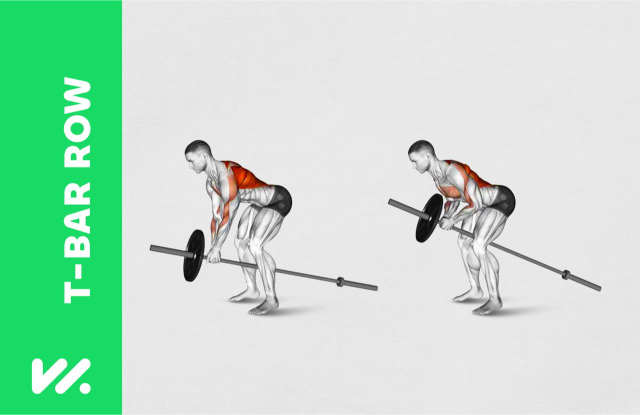
- T-Bar Row or Cable Row: Great machine-based or cable alternatives with fixed resistance angles.
Incorporate the One-Arm Dumbbell Row
Add one-arm dumbbell rows to your back day, pull workout, or upper-body routine to isolate the lats and improve pulling strength. Combine with deadlifts, chin-ups, and face pulls for a complete posterior chain strategy. This move is especially effective when performed slowly and with intentional focus on lat contraction.
“The one-arm dumbbell row is an essential movement for developing serious back strength and detail. When done correctly, it not only builds muscle but teaches you how to feel and control your lats.”
— NASM-Certified Strength Specialist