Exercise Profile
Target Muscle Group:
- Primary: Cervical Muscles (Sternocleidomastoid, Scalene, Upper Trapezius)
- Secondary: Levator Scapulae, Suboccipital Muscles
Exercise Type:
- Mobility / Rehabilitation
Equipment Required:
- None (Optional: Towel or Yoga Mat for Comfort)
Mechanics:
- Isolation (Single-Joint Exercise – Cervical Spine Movement)
Force Type:
- Active Stretching / Dynamic Movement
Experience Level:
- All Levels (Beginner to Advanced)
Best For:
- Neck Mobility, Posture Correction, Tension Relief
Common Risks:
- Neck Strain (if performed too aggressively or with poor alignment)
Overview
The Neck Glide is a gentle, controlled exercise designed to improve mobility in the cervical spine and alleviate stiffness caused by poor posture, desk work, or stress. By guiding the neck through its natural range of motion, this movement enhances blood flow to the muscles, reduces tension headaches, and restores functional movement patterns. Ideal for office workers, athletes, or anyone recovering from neck strain, it’s a safe, accessible drill for maintaining neck health and preventing chronic pain.
Exercise Instructions
Step-by-Step Form:
- Setup:
- Sit or stand tall with shoulders relaxed and spine neutral.
- Gaze straight ahead, chin parallel to the floor.
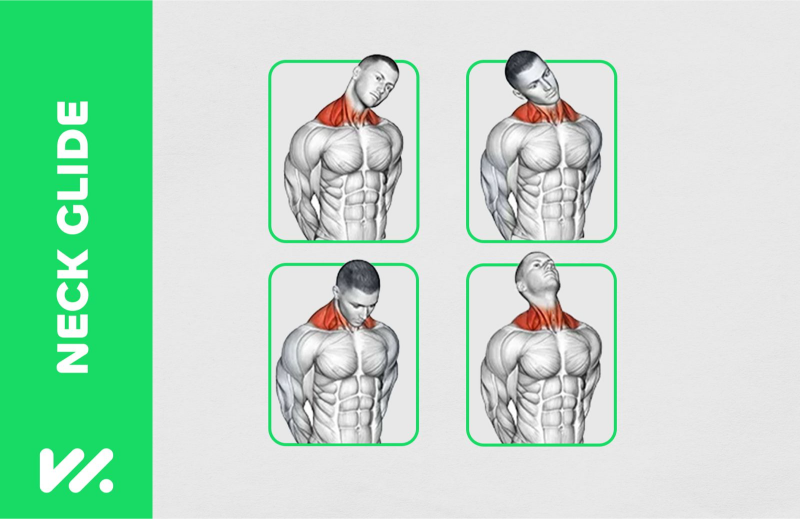
- Movement Phase (Forward/Backward Glide):
- Forward Glide: Gently glide your head forward, leading with your chin (like a turtle peeking). Keep shoulders still.
- Backward Glide: Retract your chin and glide your head backward, creating a “double chin” position.
- Repeat 8–10 times, moving slowly.
- Movement Phase (Side-to-Side Glide):
- Glide your head horizontally to the right, bringing your ear toward your shoulder (avoid shrugging).
- Return to center, then glide to the left.
- Repeat 8–10 times per side.
Repetitions:
- Perform 2–3 sets daily or as needed for tension relief.
Professional Tips
Maximize Results:
- Breathing: Inhale during the glide, exhale as you return to neutral.
- Control: Move as if drawing your head along a straight rail—no jerking or tilting.
- Progression: Add light resistance by pressing fingertips against your temple during side glides.
Avoid Common Mistakes:
- Rounded Shoulders: Keep shoulders down and chest open.
- Overarching the Neck: Maintain a neutral spine; avoid jutting the head forward excessively.
- Rushing: Prioritize slow, deliberate movements over speed.
Integration:
- Pair with upper trapezius stretches or thoracic spine rotations for full upper-body mobility.
- Use as part of a warm-up for workouts or a cooldown after desk work.
Benefits of Neck Glide
- Pain Relief: Reduces tension headaches and stiffness from prolonged screen time.
- Postural Alignment: Counters “text neck” and forward head posture.
- Functional Mobility: Enhances range of motion for driving, swimming, or overhead activities.
Variations & Alternatives
- Chin Tucks: Isolated retraction to strengthen deep neck flexors.
- Cervical CARs (Controlled Articular Rotations): Dynamic circles for 360° neck mobility.
- Resisted Neck Glides: Use a resistance band or hand pressure to add intensity.
- Levator Scapulae Stretch: Targets the side neck muscles in a static hold.
Incorporate this exercise into Desk Stretch Routines, Post-Workout Cooldowns, or Rehab Programs to maintain a pain-free, mobile neck!