Exercise Profile
Target Muscle Group:
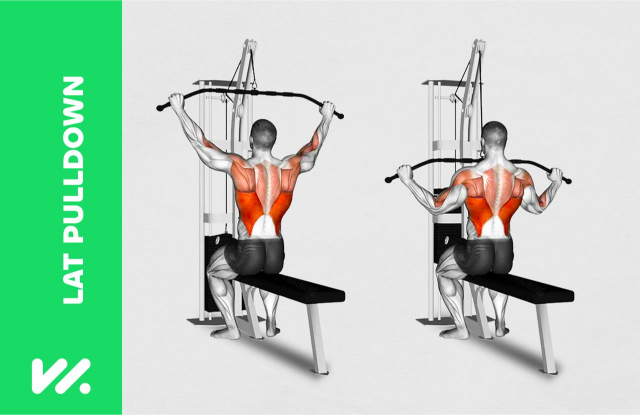
- Primary: Latissimus Dorsi (Lats)
- Secondary: Biceps Brachii, Rear Deltoids, Rhomboids, Trapezius
Exercise Type:
- Strength Training / Hypertrophy
Equipment Required:
- Lat Pulldown Machine
Mechanics:
- Compound (Multi-Joint Exercise – Shoulder Adduction/Elbow Flexion)
Force Type:
- Pull (Concentric & Eccentric Phases)
Experience Level:
- All Levels (Beginner to Advanced)
Best For:
- Back Width, Posture Improvement, Pulling Strength
Common Risks:
- Shoulder Impingement (if bar is pulled behind the neck with poor mobility)
Overview
The Lat Pulldown is a cornerstone exercise for developing a V-tapered back, improving posture, and building functional strength for pulling movements like climbing or rowing. By mimicking the pull-up motion with adjustable resistance, it’s accessible to all fitness levels and ideal for those working toward their first unassisted pull-up. This exercise emphasizes the lats while engaging the entire upper body, making it a staple in bodybuilding, athletic training, and general fitness programs.
Exercise Instructions
Step-by-Step Form:
- Setup:
- Adjust the thigh pad snugly against your legs to anchor your body.
- Grip the bar slightly wider than shoulder-width (overhand grip).
- Sit upright, chest up, and lean back slightly (10–15°).
- Lowering Phase:
- Pull the bar down to your upper chest, leading with your elbows.
- Squeeze your shoulder blades together at the bottom.
- Peak Contraction:
- Hold for 1–2 seconds, feeling your lats engage.
- Raising Phase:
- Slowly return the bar to the starting position, stretching your lats fully.
- Repetitions:
- Perform 3–4 sets of 8–15 reps for hypertrophy or 4–6 reps for strength.
Professional Tips
Maximize Results:
- Grip Variations:
- Wide Grip: Prioritizes lat width.
- Close Underhand Grip: Engages biceps and lower lats.
- Tempo Control: Use a 2-second pull, 1-second squeeze, and 3-second release.
- Scapular Engagement: Initiate the movement by retracting your shoulder blades.
Avoid Common Mistakes:
- Using Momentum: Avoid swinging or leaning back excessively.
- Partial Range of Motion: Stretch fully at the top and contract fully at the bottom.
- Pulling Behind the Neck: This risks shoulder injury—stick to front-of-chest pulls.
Progression:
- Increase weight gradually (5–10 lbs / 2–4 kg) while maintaining strict form.
- Advanced lifters can try drop sets or isometric holds at the bottom.
Benefits of the Lat Pulldown
- Postural Health: Counters rounded shoulders from desk work.
- Functional Strength: Enhances performance in pull-ups, rows, and climbing.
- Aesthetic Appeal: Creates the coveted “V-taper” physique.
Variations & Alternatives
- Neutral-Grip Lat Pulldown: Uses a parallel grip for shoulder-friendly pulling.
- Single-Arm Lat Pulldown: Corrects muscle imbalances with unilateral training.
- Straight-Arm Pulldown: Isolates the lats with extended arms.
- Assisted Pull-Up Machine: Bridges the gap to bodyweight pull-ups.
Add this exercise to your Back Day Routine or pair it with Full-Body Workouts for a balanced, powerful physique!