Exercise Profile
Target Muscle Group:
Primary: Gluteus Maximus
Secondary: Gluteus Medius, Hamstrings, Core (for stabilization)
Exercise Type:
Strength Training / Toning
Isolation (Single-Joint Exercise)
Equipment Required:
Cable Machine (with ankle strap), Resistance Bands, or Bodyweight (on mat)
Mechanics:
Isolation (Single-Joint Exercise)
Force Type:
Push (Concentric & Eccentric Phases)
Experience Level:
Beginner to Intermediate
Best For:
Glute building, booty shaping, lower body toning, hip extension, home workouts
Common Risks:
Lower back strain if arching the spine, swinging the leg using momentum, poor form with excessive load
Overview
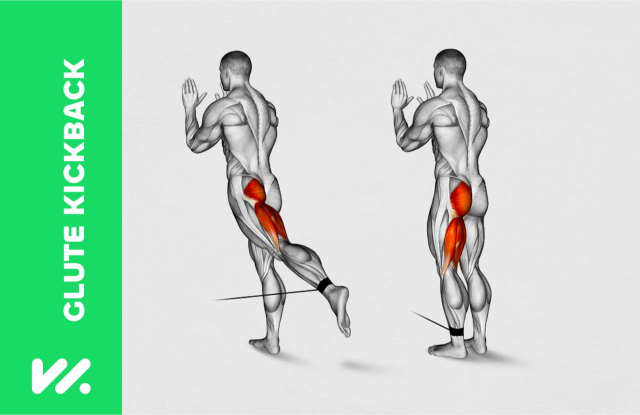
The Glute Kickback is a staple glute isolation exercise that directly targets the gluteus maximus, helping to lift, tone, and build a more rounded backside. Whether performed with a cable machine, resistance bands, or just your body weight, this movement is excellent for developing the upper portion of the glutes and improving hip extension strength. Popular among athletes, fitness models, and beginners alike, the glute kickback is ideal for enhancing lower body aesthetics, core stability, and posterior chain activation.
Exercise Instructions
Step-by-Step Form:
Setup (Cable or Bodyweight):
Attach an ankle strap to the low pulley of a cable machine (if using).
Kneel on all fours (for bodyweight) or stand and brace yourself against the machine or bench for support.
Starting Position:
Keep your working leg slightly bent, core tight, and back flat.
If kneeling, place hands directly under shoulders and knees under hips.
Contraction Phase:
Exhale and kick your leg back and up, extending at the hip.
Focus on squeezing your glutes at the top of the movement.
Keep the motion controlled and isolate the glute muscles.
Peak Contraction:
Pause briefly at the top, keeping your leg straight or slightly bent.
Do not hyperextend or arch your lower back.
Returning Phase:
Inhale and slowly return the leg to the starting position.
Maintain tension throughout the glute movement.
Repetitions:
Perform 3–4 sets of 12–20 reps per leg.
Add resistance gradually to continue stimulating growth.
Professional Tips
Maximize Results:
- Perform the exercise slowly and focus on the mind-muscle connection.
- Keep your core braced to avoid arching the back.
- Add a glute squeeze at the top of every rep for full activation.
Avoid Common Mistakes:
- Don’t swing your leg—control every phase of the movement.
- Avoid arching your back or twisting your hips.
- Don’t use excessive weight that compromises your form.
Progression:
- Use cable glute kickbacks for continuous tension and resistance.
- Add resistance bands around your thighs or ankles for at-home variation.
- Perform pause reps or pulse reps for increased time under tension.
Benefits of Glute Kickbacks
- Glute Isolation: Directly targets the gluteus maximus, the largest and most powerful muscle in your lower body.
- Booty Building & Shaping: Ideal for enhancing glute aesthetics, symmetry, and lift.
- Improved Hip Extension: Strengthens the muscles responsible for running, jumping, and climbing.
- Lower Back and Knee Support: Helps stabilize the pelvis, reducing strain on the lower back and knees.
- Versatile & Beginner-Friendly: Can be performed anywhere—at the gym, at home, or on the go.
Variations & Alternatives
- Cable Glute Kickback: Performed with a cable machine for increased resistance.
- Banded Glute Kickbacks: Great for home workouts and glute activation drills.
- Kneeling Donkey Kicks: Bodyweight version using a mat; perfect for beginners.
- Standing Kickbacks: Uses gravity and light resistance; focuses on balance and control.
- Glute Bridge or Hip Thrusts: Compound alternatives to increase glute hypertrophy.
Incorporate the Glute Kickback
Use glute kickbacks in your glute-focused, leg, or lower body training routines to emphasize shape, symmetry, and strength. This movement works best at the start of your workout for muscle activation or at the end as a finisher to burn out your glutes. Combine with squats, lunges, and hip thrusts for complete glute development.
“If you want rounder, stronger, and more defined glutes, start with the glute kickback. It’s one of the best exercises to isolate and sculpt your backside—especially when done with focus and control.”
— Certified Glute Specialist (NASM-CPT)