Exercise Profile
Target Muscle Group:
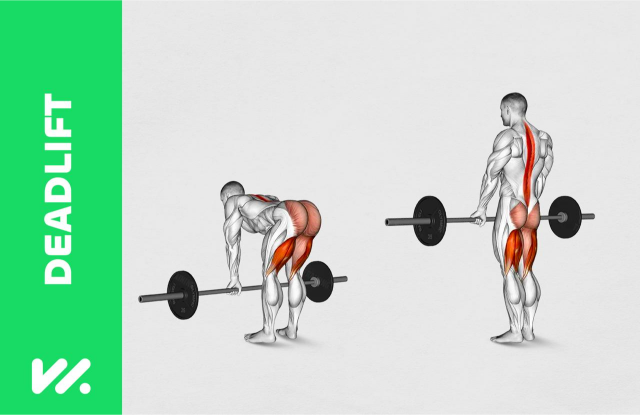
Primary: Gluteus Maximus, Hamstrings, Erector Spinae (Lower Back)
Secondary: Quadriceps, Trapezius, Forearms, Core, Upper Back, Lats
Exercise Type:
Strength Training / Hypertrophy
Equipment Required:
Barbell (can also use dumbbells or trap bar for variations)
Weight Plates
Mechanics:
Compound (Multi-Joint Exercise)
Force Type:
Pull (Concentric & Eccentric Phases)
Experience Level:
Intermediate to Advanced (Beginners should master hip hinge and basic lifts first)
Best For:
Full-Body Strength, Power Development, Athletic Performance, Posterior Chain Hypertrophy
Common Risks:
Lower Back Injury (if rounding the spine), Grip Fatigue, Excessive Weight, Poor Lifting Mechanics
Overview
The Deadlift is widely regarded as one of the most effective compound lifts for building total-body strength, muscle mass, and athletic power. It primarily targets the posterior chain—including the glutes, hamstrings, and lower back—while also engaging the quads, upper back, and grip. The deadlift is foundational for athletes, powerlifters, and anyone looking to develop real-world functional strength. Proper form and progressive overload are key to maximizing benefits and minimizing injury risk.
Exercise Instructions
Step-by-Step Form:
Setup:
- Stand with feet hip-width apart, toes pointing forward or slightly outward.
- Position the barbell over the middle of your feet (about 1 inch from your shins).
- Bend at the hips and knees to grip the bar just outside your knees, using a double overhand or mixed grip.
- Keep your chest up, back flat, and shoulders slightly in front of the bar.
Lifting Phase:
- Brace your core, engage your lats, and drive your feet into the floor.
- Extend your hips and knees simultaneously to lift the bar, keeping it close to your body.
- Maintain a neutral spine throughout the movement.
Lockout:
- Stand tall at the top with shoulders back, chest up, and hips fully extended.
- Do not hyperextend your lower back.
Lowering Phase:
- Push your hips back first, then bend your knees to lower the bar with control back to the floor.
- Reset your position before each rep.
Repetitions:
- Perform 3–5 sets of 3–8 reps for strength, or 8–12 reps for hypertrophy, depending on goals.
Professional Tips
Maximize Results:
- Focus on a strong hip hinge—push your hips back, not just your knees forward.
- Keep the bar close to your body throughout the lift for optimal leverage and safety.
- Use a hook grip or lifting straps for heavy sets if grip is a limiting factor.
- Warm up thoroughly and start with lighter weights to perfect your form.
Avoid Common Mistakes:
- Do not round your lower back—maintain a neutral spine at all times.
- Avoid jerking the bar off the floor; use a smooth, controlled pull.
- Don’t let your hips rise faster than your chest—move them together.
- Avoid bouncing the bar off the floor between reps.
Progression:
- Gradually increase weight by 2.5–5 kg (5–10 lbs) as strength improves.
- Try advanced variations (sumo, Romanian, trap bar) to target different muscles and reduce injury risk.
Benefits of the Deadlift
- Total-Body Strength: Engages nearly every major muscle group for unmatched strength development.
- Posterior Chain Power: Builds glutes, hamstrings, and lower back for athletic performance and injury prevention.
- Functional Carryover: Improves lifting, jumping, running, and daily movement patterns.
- Hormonal Boost: Stimulates testosterone and growth hormone production, supporting muscle growth.
- Grip and Core Strength: Challenges forearms, hands, and deep core stabilizers.
Variations & Alternatives
- Sumo Deadlift: Wider stance, more quad and adductor emphasis, less lower back stress.
- Romanian Deadlift: Focuses on hamstrings and glutes with less knee bend.
- Trap Bar Deadlift: Neutral grip, easier on the lower back and more beginner-friendly.
- Deficit Deadlift: Increases range of motion for greater posterior chain activation.
- Single-Leg Deadlift: Unilateral stability and balance challenge.
Incorporate the Deadlift
Add deadlifts to your lower body, full-body, or posterior chain workouts for maximum strength and muscle gains. Pair with squats, rows, and core work for a balanced program.
“The deadlift is the king of all lifts. It builds strength, muscle, and resilience, translating to better performance in sports and life. When performed with proper technique, it’s one of the safest and most effective exercises you can do.”
— National Strength and Conditioning Association (NSCA)