Exercise Profile
Target Muscle Group:
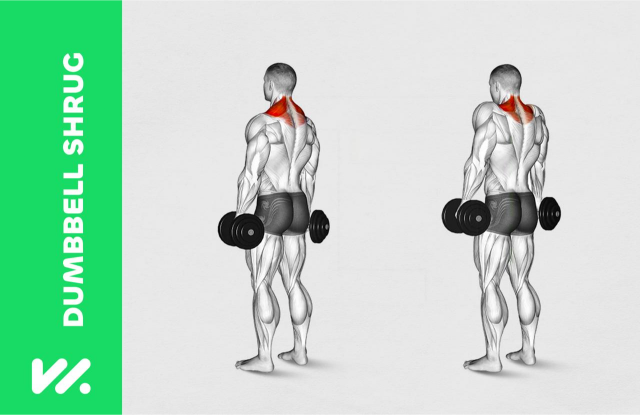
- Primary: Upper Trapezius (Traps)
- Secondary: Levator Scapulae, Rhomboids
Exercise Type:
- Strength Training / Hypertrophy (Isolation Movement)
Equipment Required:
- Dumbbells
Mechanics:
- Isolation (Single-Joint Exercise – Scapular Elevation)
Force Type:
- Pull (Concentric & Eccentric Phases)
Experience Level:
- All Levels (Beginner to Advanced)
Best For:
- Trap Development, Neck and Shoulder Stability, Posture Improvement
Common Risks:
- Neck Strain (if shrugging with improper form or excessive weight)
Overview
The Dumbbell Shrug is a targeted exercise for building thick, strong trapezius muscles, which are essential for neck stability, shoulder function, and a balanced upper-body physique. By elevating the shoulders against resistance, you strengthen the traps to improve posture, enhance athletic performance (e.g., wrestling, football), and support heavy lifts like deadlifts and cleans. Ideal for bodybuilders, powerlifters, and fitness enthusiasts, this exercise is a staple for creating a “yoked” appearance and functional upper-body strength.
Exercise Instructions
Step-by-Step Form:
- Setup:
- Stand upright with feet shoulder-width apart, holding dumbbells in each hand.
- Let arms hang naturally at your sides, palms facing your body.
- Engage your core and retract your shoulder blades slightly.
- Shrug Phase:
- Elevate your shoulders straight upward toward your ears, squeezing your traps.
- Keep arms straight and avoid bending your elbows.
- Peak Contraction:
- Hold the top position for 1–2 seconds.
- Lowering Phase:
- Slowly lower the dumbbells back to the starting position, stretching your traps fully.
- Repetitions:
- Perform 3–4 sets of 10–15 reps for hypertrophy or 6–8 reps with heavier weights for strength.
Professional Tips
Maximize Results:
- Full Range of Motion: Stretch your traps at the bottom and squeeze hard at the top.
- Tempo Control: Use a 2-second shrug, 1-second hold, and 3-second lowering phase.
- Grip Variations:
- Neutral Grip (Palms In): Reduces wrist strain.
- Reverse Grip (Palms Forward): Shifts emphasis to the rhomboids.
Avoid Common Mistakes:
- Rolling Shoulders: Shrug straight up/down—no circular motions (this stresses the neck).
- Using Momentum: Lift with your traps, not by swinging your body.
- Overloading Weight: Prioritize form over ego lifting to avoid injury.
Progression:
- Gradually increase dumbbell weight (5–10 lbs / 2–4 kg) as strength improves.
- Advanced lifters can try paused shrugs (3-second hold at the top) or farmer’s carries for endurance.
Benefits of the Dumbbell Shrug
- Aesthetic Appeal: Develops the “mountain range” look between neck and shoulders.
- Functional Strength: Enhances grip and shoulder stability for heavy lifts.
- Postural Support: Strengthens upper back muscles to counter slouching.
Variations & Alternatives
- Barbell Shrug: Allows heavier loading with a straight bar.
- Behind-the-Back Barbell Shrug: Targets traps from a different angle.
- Trap Bar Shrug: Reduces spinal compression with a neutral grip.
- Cable Shrug: Provides constant tension via a low pulley machine.
- Face Pulls: Complements trap training with rear delt and upper back focus.
Incorporate this exercise into Back Day Workouts, Powerlifting Routines, or Posture-Focused Programs to build a strong, balanced upper body!